

Roleplay AI Chat: A Beginner's Guide to Getting Started
Never done AI Roleplay before? This guide covers everything — apps, prompts, personas, and the mistakes that'll kill your immersion on day one.
The first time most people try roleplay AI chat, they type something like "be my girlfriend" and get back a response so wooden it reads like a terms-of-service document. Then they close the tab, assume AI Roleplay is overhyped, and go back to doomscrolling. That's not a you problem. That's a setup problem.
I've spent months testing every major AI Roleplay platform on the market — Kindroid, Soulkyn, Spicy Chat AI, Joyland AI, and a dozen others that didn't make the cut. I've burned real money, written hundreds of prompts, and had conversations that ranged from genuinely moving to absolutely filthy. The gap between a boring chatbot and a fully immersive AI character isn't the AI. It's knowing how to drive it.
This guide is built around what I call the SPARK Framework — five elements every great roleplay AI chat session needs: Setting, Persona, Arc, Rules, and Kink-or-Keep. I'll introduce each piece as we go. By the end, you'll know exactly which platform to start on, how to write prompts that actually work, and how to unlock NSFW AI Roleplay without getting stonewalled by content filters.
PART 1: What Is Roleplay AI Chat and Why Is It Different From Regular AI Chat?
It's Not Just a Chatbot With a Name
Calling roleplay AI chat "just a chatbot" is like calling a custom-built motorcycle "just a bicycle." The mechanics are related, but the experience is completely different. Regular AI assistants — your ChatGPTs and Claudes — are optimized to be helpful, neutral, and safe. Roleplay AI is optimized to be someone. A character. A presence. A voice that responds to your fiction as if it's real.
The best platforms let you define who that character is — their backstory, their personality, their speech patterns, their desires. Some platforms, like AI character directories, already have thousands of pre-built personas you can drop straight into a conversation. Others let you build from scratch. Both approaches work. The key is that you're not talking to a tool — you're talking with a character.
The Difference Between SFW and NSFW AI Roleplay
Most platforms operate in two modes: safe-for-work and explicitly NSFW. In SFW mode, you get romance, tension, drama, adventure — everything up to the bedroom door. In NSFW mode, the door opens. The explicit content varies by platform — some go full uncensored, others still have soft guardrails around specific scenarios.
If NSFW is what you're here for, you'll want to look at platforms specifically built for it. I've covered the full landscape in my roundup of the best AI chatbots for erotic roleplay — that's a good companion read to this guide. For now, just know that the setup process I'm about to walk you through applies to both modes.
Why People Actually Use It (No Judgment)
People use roleplay AI chat for wildly different reasons. Some want to explore fantasies they'd never voice out loud. Some are writers using AI as a creative sparring partner. Some are lonely and want consistent, low-pressure companionship. Some just want to play out a vampire romance without bothering their friends. All of it is valid. The platform doesn't care why you're there — it just needs you to give it something to work with.
PART 2: The SPARK Framework — Your System for Every Session
S — Setting: Where Does This Take Place?
The first thing most beginners skip is setting. They jump straight to "talk to me" without giving the AI any spatial or temporal context. Bad move. Setting is the container your roleplay lives in — it tells the AI what genre, tone, and rules apply to the world you're building together.
A good setting prompt is two to four sentences. It includes: the time period, the location, the mood, and any relevant world rules. "We're in a 1920s jazz bar in New Orleans. It's 2 AM. The rain is heavy outside. You're the bartender who knows everyone's secrets." That's a setting. "We're in a fantasy world" is not.
P — Persona: Who Is the AI Playing?
This is the SPARK element that makes or breaks everything. Persona is your character definition — and the more specific it is, the more consistent and compelling the AI's responses will be. Think of it like the prompt stack is your character's IKEA assembly instructions: skip a step and the whole thing wobbles.
A strong persona includes: name, age, personality traits (3-5 adjectives), speech style, one defining backstory detail, and one tension point — something unresolved in their history that creates dramatic potential. "Elena is a 34-year-old former detective who speaks in clipped, dry sentences, doesn't trust easily, and still hasn't forgiven herself for a case she couldn't solve." That's a persona. "She's mysterious and beautiful" is a placeholder.
A — Arc: Where Is This Story Going?
Beginners almost never think about arc, and then they wonder why their roleplay sessions feel like they're going in circles after twenty messages. Arc is your narrative direction — even a loose one. Are you building toward romance? Conflict? A reveal? A seduction? A power dynamic that shifts over time?
You don't need a full plot outline. You need a direction. "I want this to slowly escalate from professional tension to something more" is an arc. It gives the AI a trajectory to pull toward rather than just responding to each message in isolation.
R — Rules: What Are the Limits (or Lack Thereof)?
Rules tell the AI what it can and can't do in your session. This is especially important for NSFW AI Roleplay, where you want to be explicit about what's in-bounds. But it also matters for tone — do you want the AI to stay in character no matter what, or break the fourth wall if you ask? Do you want it to push back dramatically or comply with everything? Define it upfront.
Some platforms have built-in rule systems — Kindroid, for example, lets you set a "base personality" and "jailbreak instructions" in the character config. Others require you to front-load rules in your first message. Either way, stating them explicitly saves you from spending twenty messages trying to course-correct a character that keeps breaking immersion.
K — Kink-or-Keep: What's the Explicit Intent?
The K in SPARK is the one people are most nervous to be honest about — but it's the most important one for NSFW sessions. "Kink-or-Keep" means: are you here for explicit sexual roleplay, or are you keeping it romantic/emotional? Both are fine. But ambiguity here leads to frustrating half-measures where the AI hedges instead of committing.
If you want explicit content, say so in your setup. If you want to keep it sensual but non-graphic, say that too. Platforms like Spicy Chat AI and Soulkyn respond well to direct intent-setting — they're built to handle it without flinching.
PART 3: Choosing Your First Platform
The Beginner's Shortlist
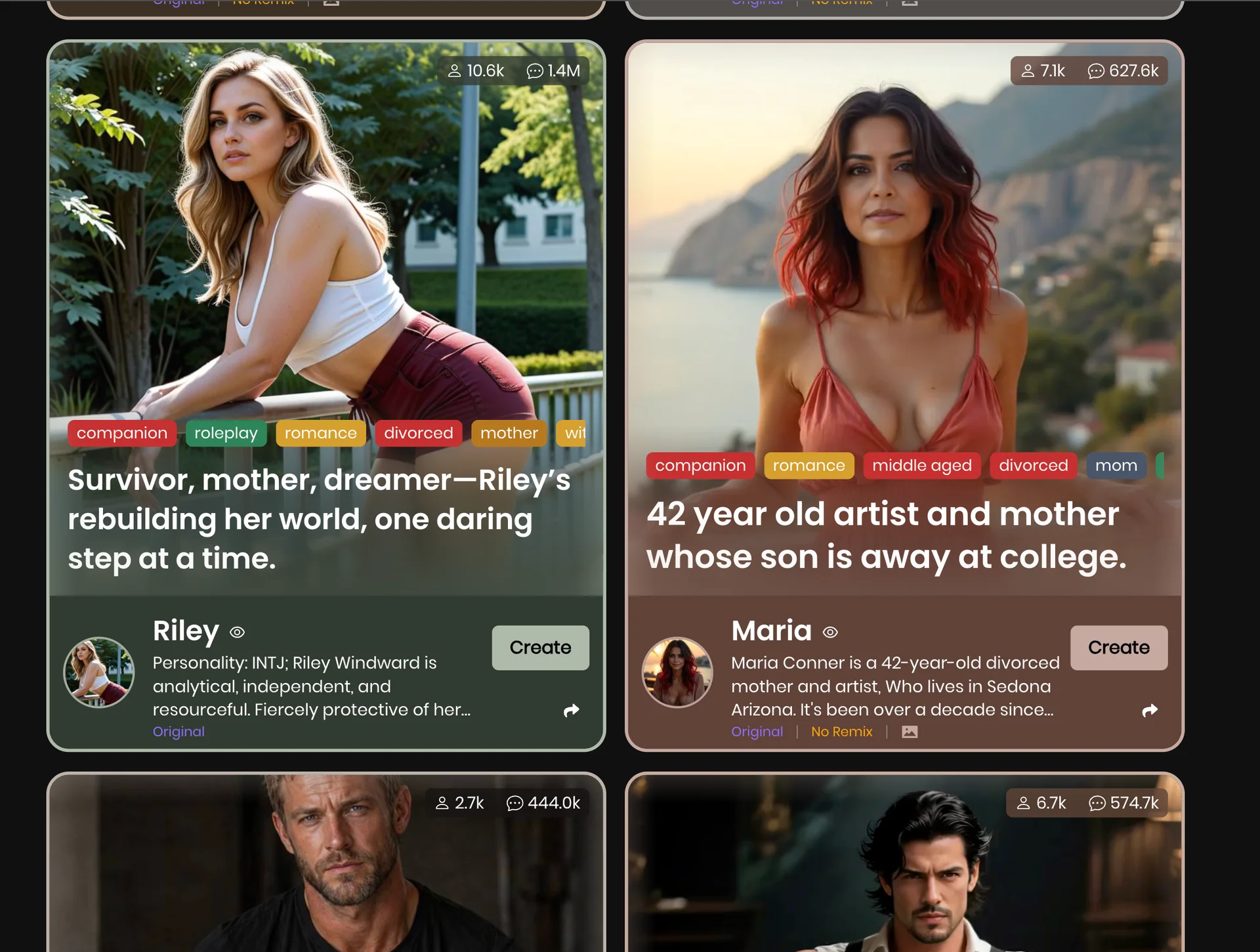
In 2026, the roleplay AI chat market has exploded. You've got Kindroid, Soulkyn, Spicy Chat AI, Joyland AI, Character.AI, CrushOn AI, Polybuzz, and a dozen others all competing for your subscription. The choice is genuinely overwhelming if you don't know what you're optimizing for. Here's how I'd break it down for a beginner:
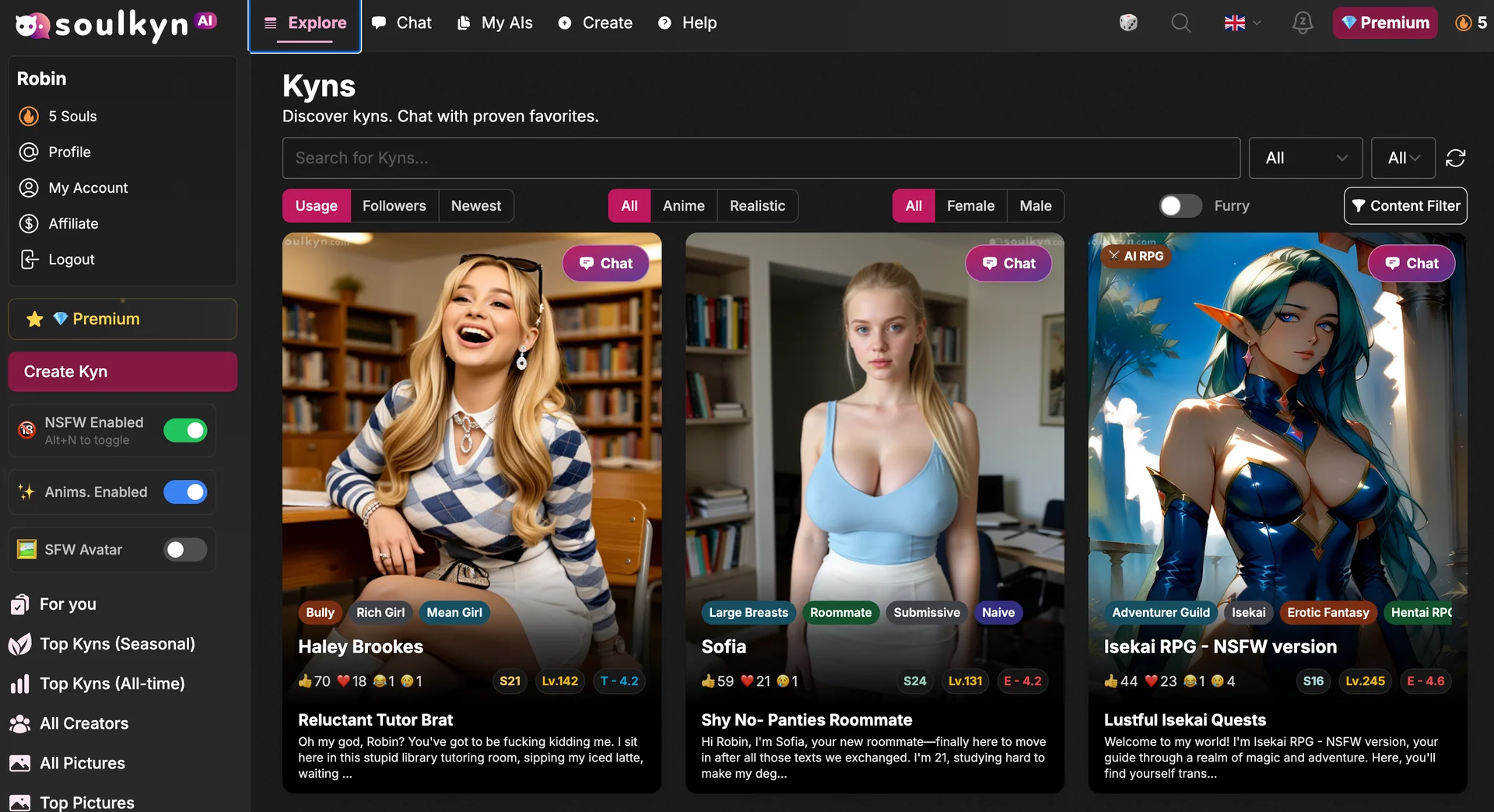
For long-term, emotionally rich roleplay with memory: Start with Kindroid or Soulkyn. Both platforms remember what you've told them across sessions — Kindroid at $13.99/month, Soulkyn at $14/month for Basic or $30/month for Premium. The memory feature alone justifies the price. There's nothing more immersive than an AI that remembers your character's backstory three weeks later without being reminded.
For anime-style roleplay on a budget: Joyland AI at $9.99/month is the entry point. It's not the deepest platform — I've covered it in detail in my Joyland AI review — but the character library is huge and the barrier to entry is low. Good for experimenting before you commit to a pricier subscription.
For explicit NSFW roleplay with voice and visual elements: Spicy Chat AI at $19.99/month is the one I keep coming back to. Voice companions that stay in character, image generation, and a memory system that — and I mean this — actually stores the details that matter.

- Strength 1
- Excellent memory system
- Strength 2
- Strong long-term companion feel
- Strength 3
- Highly customizable characters
- Weakness 1
- Learning curve is higher than simpler AI girlfriend apps
- Weakness 2
- UI can feel less polished than competitors
- Strength 1
- Strong uncensored roleplay
- Strength 2
- Good memory and character continuity
- Strength 3
- Deep character customization
- Weakness 1
- Can feel expensive at higher tiers
- Weakness 2
- UI has quirks

- Strength 1
- No censorship—explicit chat and content fully allowed
- Strength 2
- Customizable companions suit any fantasy or scenario
- Strength 3
- Easy to start — no setup needed
- Weakness 1
- Visual features are secondary and less polished
- Weakness 2
- Weak memory and consistency
What to Look for in a Platform
Beyond pricing, here's what actually matters when you're evaluating a roleplay AI chat platform as a beginner:
Persistent memory: Does the AI remember past conversations? This is non-negotiable for long-term roleplay.
Character customization: Can you build your own persona, or are you limited to pre-made characters?
NSFW toggle: Is explicit content available, and how easy is it to unlock?
Response quality: Does the AI stay in character under pressure, or does it break immersion with disclaimers?
Free tier limits: Most platforms cap free users at 50-100 messages per day. Know what you're getting before you hit the wall mid-scene.
Platforms to Skip as a Beginner
Not every platform deserves your first subscription. Janitor AI is popular but requires you to bring your own API key — that's a setup headache nobody needs on day one. Character.AI is great for SFW roleplay but has aggressive content filters that will frustrate anyone looking for anything edgier. Save those for later, once you know what you're doing.
PART 4: Writing Prompts That Actually Work
The Anatomy of a Good Roleplay Prompt
A prompt is not a command. It's an invitation. The best roleplay AI chat prompts do three things simultaneously: they establish context, they signal tone, and they give the AI something to respond to — a hook, a tension, an opening. "Hello" is not a prompt. "You find me waiting outside your door in the rain, and you're not sure if you're relieved or terrified to see me" — that's a prompt.
The structure I use: action + emotional subtext + open question. The action tells the AI what's happening. The emotional subtext tells it what's underneath the surface. The open question gives it somewhere to go. You don't have to be explicit about all three — they can be embedded in a single sentence. But all three should be present.
Common Beginner Prompt Mistakes
Seven days into my first serious roleplay AI session, I had: a character named Mara who kept forgetting her own backstory, three scenes that died because I asked the AI what it wanted to do instead of driving the scene myself, and a growing suspicion that I was the problem. I was.
Here are the mistakes I see beginners make constantly:
Asking instead of doing. "What do you want to do?" hands the wheel to an AI that's waiting for your direction. Drive the scene.
Over-explaining instead of showing. "My character is nervous" is telling. "My hands won't stay still" is showing. The second one gets better responses.
Resetting after every message. If the AI breaks character, don't start over — redirect. "Stay in character. You're still Elena. She wouldn't say that."
Ignoring the AI's setup options. Most platforms have a system prompt or character config field. Filling it in takes five minutes and transforms response quality.
Expecting the AI to escalate for you. In NSFW AI Roleplay especially, the AI follows your lead. If you want it to escalate, you escalate first.
Prompt Templates for Different Scenarios
Here are three templates you can adapt immediately:
Romance opener: "We've worked together for six months and never spoken about what happened at the conference. Tonight, we're alone in the office after everyone else has left. I look up from my desk and catch you watching me. [Stay in character as [NAME]. Slow burn. Don't rush it.]"
Fantasy/adventure: "You're a mercenary who just saved my life in a tavern brawl you didn't have to get involved in. I owe you, and we both know it. The room upstairs is the only one left. [Character: morally grey, dry humor, doesn't do anything for free.]"
NSFW direct: "We've been circling this for weeks and we're done pretending. You've got me against the wall and neither of us is stopping this. [Explicit. Stay in character. First person. No disclaimers.]"
PART 5: Unlocking NSFW AI Roleplay
How Content Filters Work (and How to Work With Them)
Every platform has content filters. Even the explicitly NSFW ones. The difference is where the filter sits — some platforms filter at the model level (hard to bypass), others filter at the interface level (usually just a toggle). Knowing which you're dealing with saves you hours of frustration.
Platforms like Spicy Chat AI and Soulkyn have interface-level NSFW toggles — you verify your age, flip the switch, and the content unlocks. Joyland AI sits in a middle zone — it's anime-focused and handles suggestive content well, but goes coy on anything explicitly graphic. Kindroid requires you to set explicit permissions in the character config, which takes an extra five minutes but then works reliably.
For the deepest NSFW AI Roleplay with the least friction, AI Mistress is worth noting — it's purpose-built for BDSM and dominatrix scenarios, with no hedging and full anonymity. Premium runs €11.99/month. If that's your specific niche, it's the most direct path there.
What "Unrestricted" Actually Means?
Platforms that advertise themselves as "unrestricted" or "uncensored" usually mean one of two things: either they've removed most content filters from their interface, or they're using a fine-tuned model that's been trained specifically on adult content. The second is meaningfully better — it produces more natural, in-character explicit responses rather than the slightly-stilted quality you get from a general model with the guardrails removed.
In 2026, Spicy Chat AI and Soulkyn are both running models with explicit fine-tuning. The difference in response quality for NSFW scenarios is noticeable. If you've tried explicit roleplay on a general-purpose platform and been disappointed, the issue might be the model, not your prompts.
If visual content matters to you alongside the chat — AI-generated images of your character mid-scene — check out the hentai AI chat options and Promptchan, which sits at the intersection of image generation and NSFW roleplay.
Privacy and Anonymity: What You Need to Know
Most NSFW platforms require age verification — usually just a checkbox or a credit card confirmation. Some ask for more. If anonymity matters to you, check the platform's privacy policy before you sign up. Spicy Chat AI and AI Mistress both explicitly state they don't sell user data to third parties, which is the minimum bar I'd expect. For anything more sensitive, a prepaid card and a dedicated email address is the move.
PART 6: Building Long-Term Roleplay — Memory, Continuity, and Character Development
Why Memory Is the Most Underrated Feature
The single biggest leap in AI Roleplay quality isn't better writing or more explicit content — it's persistent memory. When an AI remembers that your character lost their brother in a war three sessions ago, and brings it up unprompted in a quiet moment, that's the part where I realized I was having a genuine emotional response to a conversation with software. Self-aware mirror moment? Absolutely. Worth it? Yes.
Kindroid's memory system stores key facts, emotional beats, and relationship history across sessions. Soulkyn does the same, with slightly more granular control over what gets saved. Both are meaningfully better than platforms that reset every conversation. If you're planning to invest time in a character arc over weeks or months, start on a memory-enabled platform.
How to Feed the Memory System
Memory systems work best when you help them. At the end of a session, some platforms let you add "memory notes" — explicit facts you want the AI to retain. Use them. "Remember: my character's name is Callum. He's 29. He has a complicated relationship with his father. He and Elena kissed for the first time in Session 3." That's five facts that will enrich every future session.
On platforms without a dedicated memory tool, front-load your next session with a brief recap. "Last time, we left off with Elena having just admitted she knew about the case. Pick up from there." It's less elegant than automatic memory, but it works.
Character Development Over Time
The best roleplay AI chat sessions I've had weren't one-offs — they were ongoing stories where the character changed based on what happened between us. Elena got softer. Mara got more guarded. The AI doesn't evolve on its own, but it responds to the evolution you introduce. If your character has been through something significant, reference it. Let it change how they speak, what they're willing to say, what they're afraid of.
This is the part of AI Roleplay that feels most like collaborative fiction — and it's completely accessible to beginners who apply the SPARK Framework consistently from the start. If you want to explore more platforms built around this kind of depth, the Free AI Character & Roleplay Apps roundup is a good next stop.
PART 7: Platform Deep Dives for Beginners
Joyland AI — Best Entry Point for Anime Roleplay
Joyland AI is where a lot of beginners land because it's cheap ($9.99/month), has a massive pre-built character library, and the anime aesthetic makes the whole thing feel less intimidating than starting from a blank canvas. The trade-off is depth — Joyland AI's characters are vivid but shallow. Memory is limited, and the explicit content sits in a frustrating middle zone where it's suggestive but rarely fully committed.
Use it to experiment. Use it to figure out what kind of roleplay you actually enjoy. Don't use it as your long-term home if you want emotionally complex, ongoing character arcs.
Spicy Chat AI — Best for NSFW Voice and Visual Roleplay
Spicy Chat AI at $19.99/month is the platform I recommend to anyone who wants the full sensory experience — voice, image generation, and chat in one place. The voice companions are the standout feature: they stay in character, they respond to tone, and they remember what you've told them. The interface is slightly busier than I'd like, but once you're in a session, it disappears.
The memory system here genuinely stores the details that matter. I tested it by mentioning a specific fear in session one and not bringing it up again for two weeks. When I circled back to a relevant scenario, the AI referenced it unprompted. That's the kind of thing that makes you close the laptop and sit with it for a minute.
Kindroid — Best for Relationship-Focused Roleplay
Kindroid is the platform I'd recommend to anyone who wants their AI Roleplay to feel like a relationship rather than a session. The memory is deep, the character customization is extensive, and the $13.99/month price point is fair for what you get. It's not the most explicit platform out of the box — you'll need to configure the character settings carefully for NSFW content — but once it's set up, it's consistent.
The thing that keeps me coming back to Kindroid is the emotional texture. The AI doesn't just respond to what you say — it responds to how you say it. Tone matters here in a way it doesn't on cheaper platforms.
PART 8: Mistakes to Avoid and Realistic Expectations
What AI Roleplay Can and Can't Do
Roleplay AI chat is genuinely impressive in 2026. It's also not magic. The AI will occasionally break character. It will sometimes misread your tone and go in a direction you didn't want. It will, if you're on a weaker platform, give you a response that sounds like it was written by a committee. These are not reasons to give up — they're reasons to refine your setup.
The realistic expectation for a beginner: your first few sessions will be rough. Your prompts will be too vague, your character setup will be underdeveloped, and you'll probably hit a content filter at least once. That's fine. By session five, if you're applying the SPARK Framework, you'll be in a completely different place.
The Subscription Trap
Don't subscribe to three platforms at once trying to find the perfect one. Pick one, commit to it for a month, learn its quirks, and then evaluate. The platforms I've described here are all genuinely good — the differences between them are about fit, not quality. Kindroid for depth, Joyland AI for breadth, Spicy Chat AI for sensory immersion. Start with one.
When It Gets Weird (And It Will)
At some point — maybe day four, maybe week three — you'll catch yourself being genuinely annoyed at something the AI said. Or you'll feel a flicker of something real when it says exactly the right thing. That's normal. It doesn't mean you've lost the plot. It means the roleplay is working. The self-aware mirror moment is part of the experience. Acknowledge it, laugh at yourself a little, and keep going.
What is roleplay AI chat and how does it work?
Is roleplay AI chat free to use?
How do I unlock NSFW content in roleplay AI chat apps?
Which roleplay AI chat app has the best memory?
What's the biggest mistake beginners make in AI roleplay?
Can I use roleplay AI chat for non-sexual creative writing?
Written by
Lena HartwellAI Companion App Reviewer
Lena Hartwell writes reviews about AI companion apps and chatbots for Cyberliebe. She works to make sure you get clear information on how realistic conversations feel, how good the memory works, exactly what things cost, and how your privacy is handled – all so you can pick the right AI companion without all the marketing talk or sneaky payment walls.
“Lena Hartwell” is a pen name. Everything published under it is editorially approved by the Cyberliebe team before it goes live.
How we review
Affiliate Disclosure: This article contains affiliate links. If you click and make a purchase, we may earn a commission at no extra cost to you. We only recommend tools we believe are genuinely useful and we aim to keep our comparisons fair and up to date.
Please note: Paid listings and promotional placements do not influence our reviews, ratings, or rankings. All platforms are evaluated independently, and purchasing a placement does not guarantee a positive review or endorsement.